
Shopping Cart
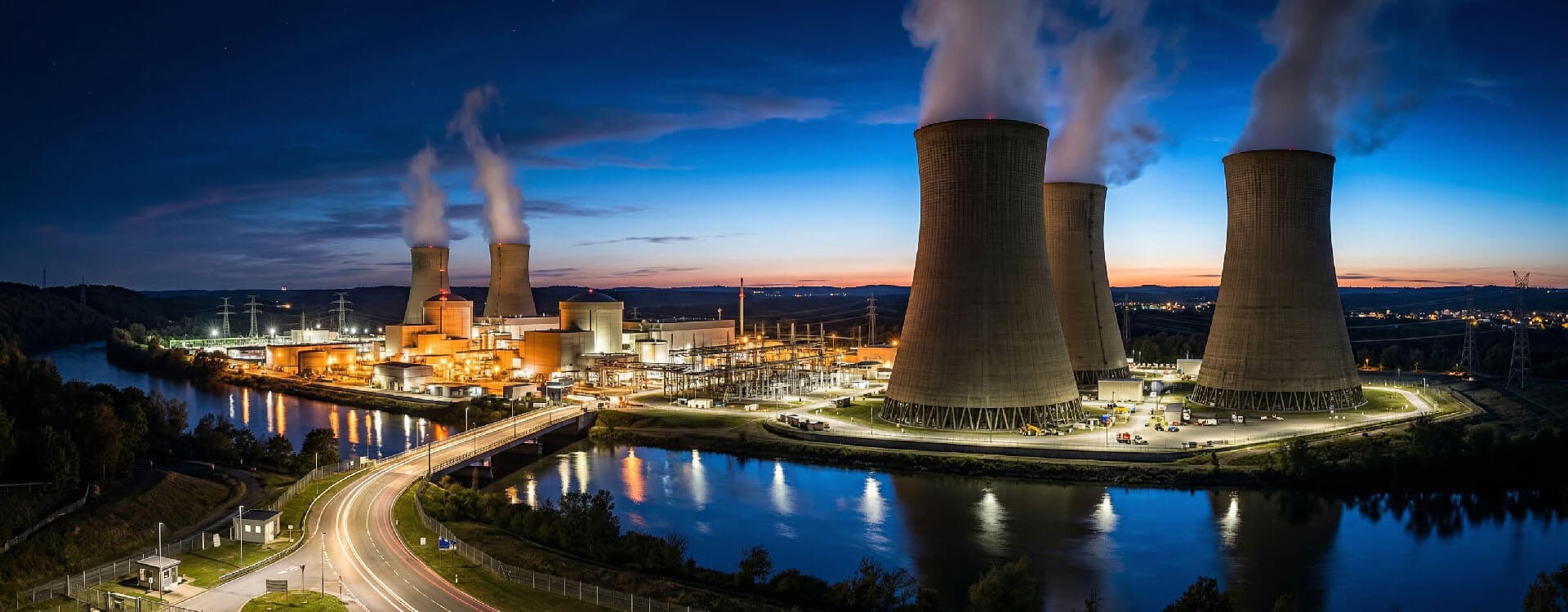
Uranium has quietly become one of the most strategically important commodities of the 21st century. As the world confronts the twin imperatives of reducing carbon emissions and meeting rapidly growing electricity demand, nuclear power — and the uranium that fuels it — has moved from a controversial energy source to an increasingly recognised necessity. At GoldMiner.cc, we extend our precious metals expertise into the broader energy metals universe, recognising that the same analytical framework and macro awareness that drives successful gold and silver investing applies equally well to uranium and other metals essential to the global energy transition. This pillar provides investors with a comprehensive foundation for understanding and investing in these critical resources.
The Nuclear Energy Renaissance: Why Uranium Demand Is Surging
Nuclear energy is experiencing a global renaissance driven by converging forces that are unlikely to reverse. Energy security concerns, intensified by geopolitical instability and the volatility of natural gas and oil markets, have prompted governments across Europe, Asia, and North America to reconsider or extend nuclear capacity. The recognition that intermittent renewable sources like solar and wind cannot alone meet baseload power demand without massive storage infrastructure has elevated nuclear's role as a reliable, low-carbon baseload power source. Emerging technologies including small modular reactors (SMRs) are attracting substantial private and government investment. Meanwhile, the growth of artificial intelligence data centres and electric vehicle charging infrastructure is creating structural new sources of electricity demand that conventional grids struggle to meet. All of this translates into growing, long-term demand for uranium — the essential fuel for nuclear power plants worldwide.
Understanding the Uranium Market: Supply, Demand, and Pricing
The uranium market operates very differently from gold or silver markets. There is no active spot exchange where uranium is continuously traded by retail investors; instead, the market functions primarily through long-term contracts between utilities and producers, with a smaller spot market providing price discovery. This structure makes uranium markets opaque but also creates opportunities for investors who understand the dynamics. Supply is heavily concentrated in a small number of countries — Kazakhstan (through KazAtomProm), Canada, and Australia account for the majority of global production. Years of depressed uranium prices following the Fukushima disaster in 2011 resulted in mine closures and drastically reduced exploration investment, creating a supply pipeline that is structurally inadequate to meet the demand now emerging from new and extended nuclear capacity globally.
Uranium Mining Companies: How to Invest in the Fuel of the Future
For investors seeking exposure to the uranium market, mining companies are the primary vehicle. Senior uranium producers — companies like Cameco (Canada) and KazAtomProm (Kazakhstan) — operate large, low-cost production facilities and can be accessed through major stock exchanges. Junior and development-stage uranium companies offer higher-risk, higher-reward exposure to the sector, with their value driven primarily by the quality of their mineral resources and the potential to develop new production as uranium prices rise. Uranium royalty companies, following the model established in gold and silver, are emerging as a lower-risk way to gain sector exposure. As with gold and silver mining, the key analytical variables include production costs, resource quality, jurisdictional risk, management track record, and sensitivity to changes in the uranium spot price. Our analytical framework at GoldMiner.cc applies consistently across all of these categories.
Energy Metals Beyond Uranium: Lithium, Copper, and the Green Transition
Uranium is not the only energy metal with a compelling investment case in the context of the global energy transition. Lithium — the cornerstone of battery technology for electric vehicles and grid storage — has seen explosive demand growth and is likely to remain structurally in deficit as EV adoption accelerates. Copper, whose electrical conductivity is irreplaceable in power generation, transmission, and electric vehicle manufacturing, is facing a structural supply deficit driven by decades of underinvestment in new mine development. Cobalt, nickel, and rare earth elements are similarly critical to the technologies that underpin the energy transition. At GoldMiner.cc, we monitor all of these markets and help investors identify the most compelling entry points and investment vehicles as each segment of the energy metals complex evolves through its individual supply and demand cycle.
Portfolio Strategy for Energy Metals Investors
Energy metals investments can provide powerful diversification benefits within a broader precious metals and resource-focused portfolio. Their performance drivers — technology adoption rates, energy policy, manufacturing demand — are partially uncorrelated with the monetary and macroeconomic factors that primarily drive gold and silver. Combining a precious metals core (physical gold and silver, gold and silver mining stocks) with carefully selected energy metals exposure (uranium, copper, lithium companies) creates a portfolio that can perform across a wider range of macroeconomic scenarios. However, energy metals carry their own specific risks — regulatory and permitting challenges, technology substitution risk, and the political dimensions of critical mineral supply chains — that require the same rigorous analytical approach we apply to precious metals. The GoldMiner.cc investment philosophy of transparency, expertise, and accessible education extends fully into this expanding universe of strategic resource investments.