
Shopping Cart
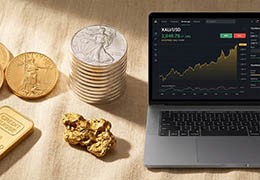


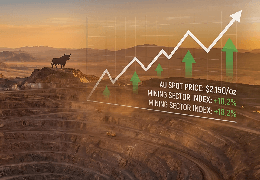


Precious metals bull markets are among the most powerful wealth-creation events in financial history. When gold, silver, and mining stocks enter a sustained uptrend — driven by the right combination of monetary conditions, macro instability, and shifting investor sentiment — the returns available to well-positioned investors can be extraordinary. But bull markets in precious metals follow recognisable patterns, and understanding those patterns is the difference between capturing generational gains and arriving too late or exiting too early. At GoldMiner.cc, studying past bull markets and identifying the signals of new ones has been a central discipline since we began tracking these markets in 2007. This pillar is your guide to understanding, preparing for, and profiting from precious metals bull markets.
What Triggers a Precious Metals Bull Market
Precious metals bull markets do not emerge randomly — they are triggered by specific combinations of macroeconomic and monetary conditions. The most consistent catalysts include accelerating inflation or credible inflation fears, declining or negative real interest rates (which reduce the opportunity cost of holding gold), loss of confidence in central bank credibility or fiscal sustainability, geopolitical instability and flight-to-safety demand, and significant weakness in the US dollar. When several of these factors converge simultaneously, the conditions for a powerful and sustained bull market in precious metals are created. The 1970s bull market was driven by the end of Bretton Woods, oil shocks, and runaway inflation. The 2001–2011 bull market was powered by post-dot-com monetary easing, dollar weakness, Chinese growth, and post-2008 quantitative easing. Understanding what drove past bull markets illuminates what to watch for in the future.
The Three Stages of a Precious Metals Bull Market
Like most investment cycles, precious metals bull markets tend to unfold in broadly recognisable stages. In the first stage, prices begin rising from depressed levels as informed, early-moving investors — typically institutions and specialist funds — begin accumulating positions. This phase is characterised by skepticism from mainstream media and the general public, who remain largely unaware of the trend or dismiss it as temporary. In the second stage, the fundamental drivers become undeniable, mainstream financial media begins covering precious metals more regularly, and a broader set of investors begins to allocate to the sector. This is typically the longest and most profitable stage for investors who positioned early. In the final, third stage — the "mania phase" — speculative excess takes hold, retail investors flood in, prices move parabolically, and the conditions for a correction or bear market begin to form. Recognising which stage a bull market is in is one of the most valuable skills a precious metals investor can develop.
How Mining Stocks Perform During Bull Markets: Historical Leverage
One of the most compelling characteristics of precious metals bull markets is the amplified performance of mining stocks relative to the underlying metals. During the 2001–2011 gold bull market, while gold itself rose approximately 650% from trough to peak, many gold mining stocks delivered returns of 1,000%, 2,000%, or more. Select junior mining companies with major discoveries delivered returns that measured in tens of thousands of percent. This leverage effect, which we have explored in depth in the mining stocks section of GoldMiner.cc, stems from the operating leverage built into mining businesses: as the gold price rises above fixed production costs, profits expand at a multiple of the metal price increase. For investors who understand this dynamic and can identify the best-positioned companies before the major moves occur, a precious metals bull market represents a genuinely exceptional wealth-building opportunity.
Investor Psychology and Behavioural Patterns in Commodity Booms
Understanding investor psychology is as important as understanding fundamentals in precious metals bull markets. The patterns of emotion that drive market cycles — disbelief, gradual acceptance, excitement, optimism, euphoria, and eventual panic — repeat with remarkable consistency across different bull markets and time periods. In the early stages, most investors are skeptical or ignorant of the trend; this is exactly when the best positions can be established at the lowest prices. As the market rises and becomes impossible to ignore, FOMO (fear of missing out) begins to drive increasingly poor entry decisions. Near the peak, speculative excess and overconfidence are pervasive. Recognising where sentiment currently sits within this spectrum — using tools like the Commitment of Traders report, public interest metrics, and media coverage intensity — helps investors calibrate their positioning and avoid the most common behavioural mistakes.
Positioning for the Next Precious Metals Bull Market
The most profitable precious metals investments are made before the mainstream recognises the bull market, not after. Building positions gradually — through a combination of physical gold and silver bullion, gold and silver ETFs, major and mid-tier mining stocks, and selected junior miners — during periods of relative calm and skepticism is the approach that has historically delivered the greatest risk-adjusted returns. At GoldMiner.cc, our portfolio is designed precisely for this: establishing broad, well-diversified precious metals exposure that can capture the full arc of a bull market cycle, from early accumulation through the powerful mid-cycle appreciation and into the eventual mania phase where selective profit-taking becomes appropriate. With approximately 30% annual returns tracked since inception, this disciplined, cycle-aware approach has demonstrated its value through real market conditions — not just theoretical models.